

What Engineers Should Look for in a Manufacturing Partner
For engineers, choosing the right manufacturing partner comes down to more than simply assessing their capabilities and equipment. The right partner should be able to understand what you’re trying to accomplish so they can identify potential challenges and offer practical recommendations for achieving the best possible results.
At CAMM Metals, we like to view ourselves as an extension of our customers’ teams. We have a deep understanding of our manufacturing processes and how they intersect, and we can identify opportunities to improve designs that enhance quality without driving up costs.
Manufacturing Expertise Should Influence the Design
A CAD model can communicate exactly what the finished product should look like, but it doesn’t always answer the question of how it should be made. That’s where your manufacturing partner’s expertise is valuable.
Different sheet metal fabrication shops may approach the same part in completely different ways based on their equipment, tooling, fixturing, and processes. For that reason, a manufacturer with an in-depth understanding of its capabilities can help identify a better approach when the original manufacturing method poses unnecessary difficulties.
Different Processes Can Create Unique Manufacturing Challenges
Many components require more than just one manufacturing process. When a project involves metal fabrication, machining, welding, laser cutting, finishing, and assembly, having those capabilities available through one manufacturing partner can be a major advantage.
At CAMM Metals, we bring a wide range of processes together under one roof. That allows our team to consider the entire manufacturing process rather than looking at each operation in isolation. It also gives us greater visibility into how components will ultimately fit and function together.
The Right Manufacturing Partner Knows Its Equipment
A manufacturer’s equipment list tells you what they can potentially do. Their experience tells you how they can do it best.
The CAMM Metals team knows the capabilities and limitations of our machines and processes. That knowledge allows us to make recommendations based on the equipment actually available to us.
For example, we recently worked with a customer on stainless steel trays that were fabricated and welded. The initial parts performed well, but the customer came back to us with tighter requirements for the next iterations, including a flatness requirement of 0.010 inches. Our team recognized that welding wasn’t the best path to achieve that requirement, so we recommended changing the approach and producing the trays as machined components. This gave us a more controlled way to achieve the tolerance requirements without introducing risk.
These are the kinds of conversations engineers should be able to have with their manufacturing partners.
The “Why” Can Lead to a Better “How”
Your manufacturer doesn’t necessarily need to know every detail about the final application, but providing some context can make a meaningful difference.
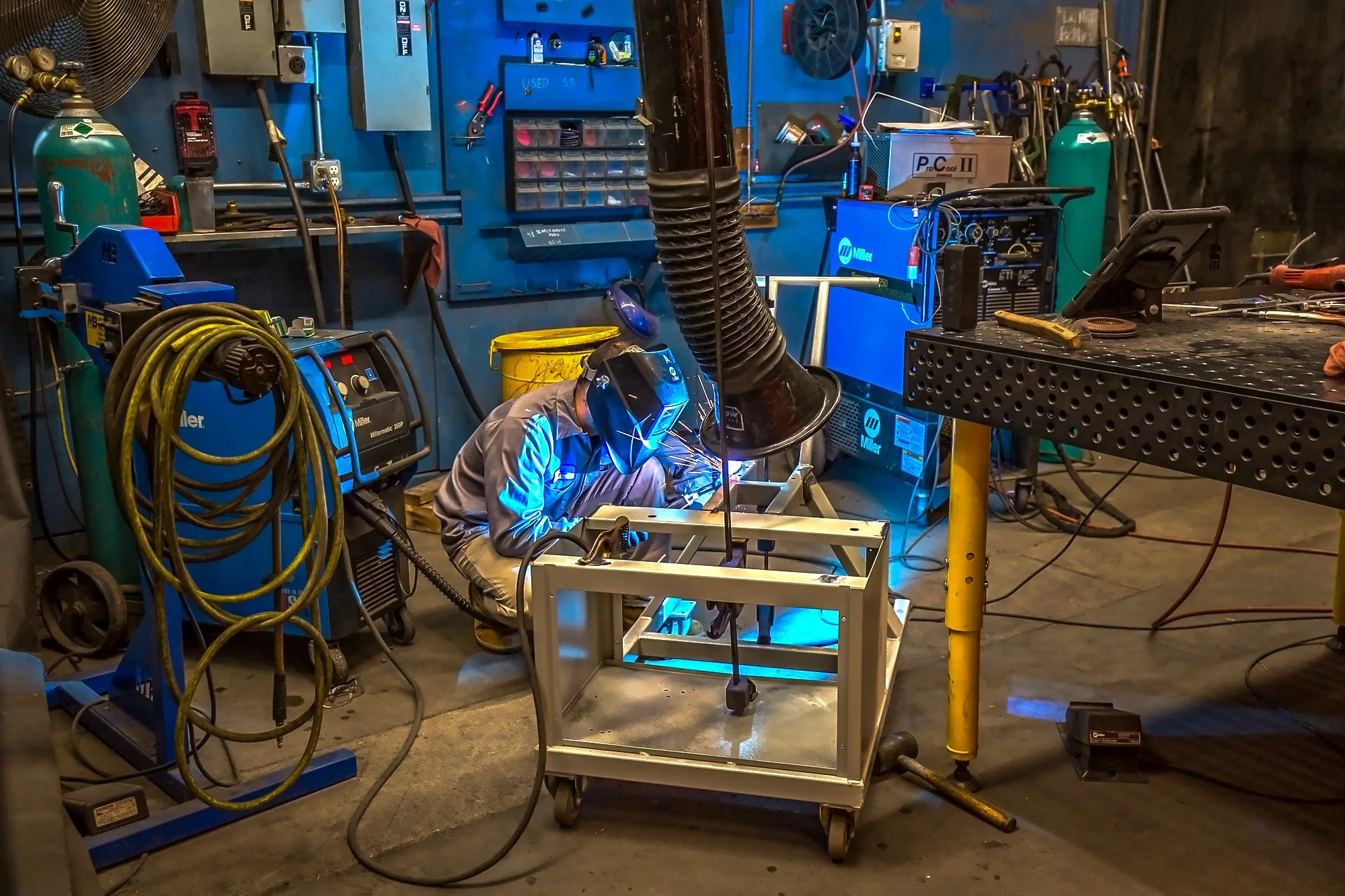
The more information we have, the more effectively our team can determine the right approach. Here are some examples of tidbits worth sharing:
What the part does
What it connects to
What component it needs to fit with
Which dimensions are most critical
What the end application entails
The drawing tells us what you’re asking us to make, but it doesn’t include the “why” that determines how we can make it better.
Start the Conversation Early
The earlier you involve your manufacturing partner in the process, the more opportunities there are to identify potential improvements.
Whether you’re developing a new component or refining an existing design, bringing CAMM Metals into the conversation early allows us to think proactively about our engineering knowledge and manufacturing experience.
Have a challenging part or assembly you’re working through? Send it our way, and let’s see how our talented team can help.