

At CAMM Metals, we’ve been waterjet cutting for 27 years. As a result, our team’s experience allows us to evaluate the application and consider factors such as:
Material type
Material thickness
Part geometry
Required precision
Production volume
Downstream machining
Material utilization
Overall cost
Sometimes waterjet cutting is the obvious choice. Other times, another process may make more sense. That distinction comes from understanding both the capabilities and limitations of the technology. If you’re not sure whether waterjet cutting is the right fit for your project, our team can help evaluate the application and recommend the most appropriate approach.
No Expensive CNC Tooling Is Required
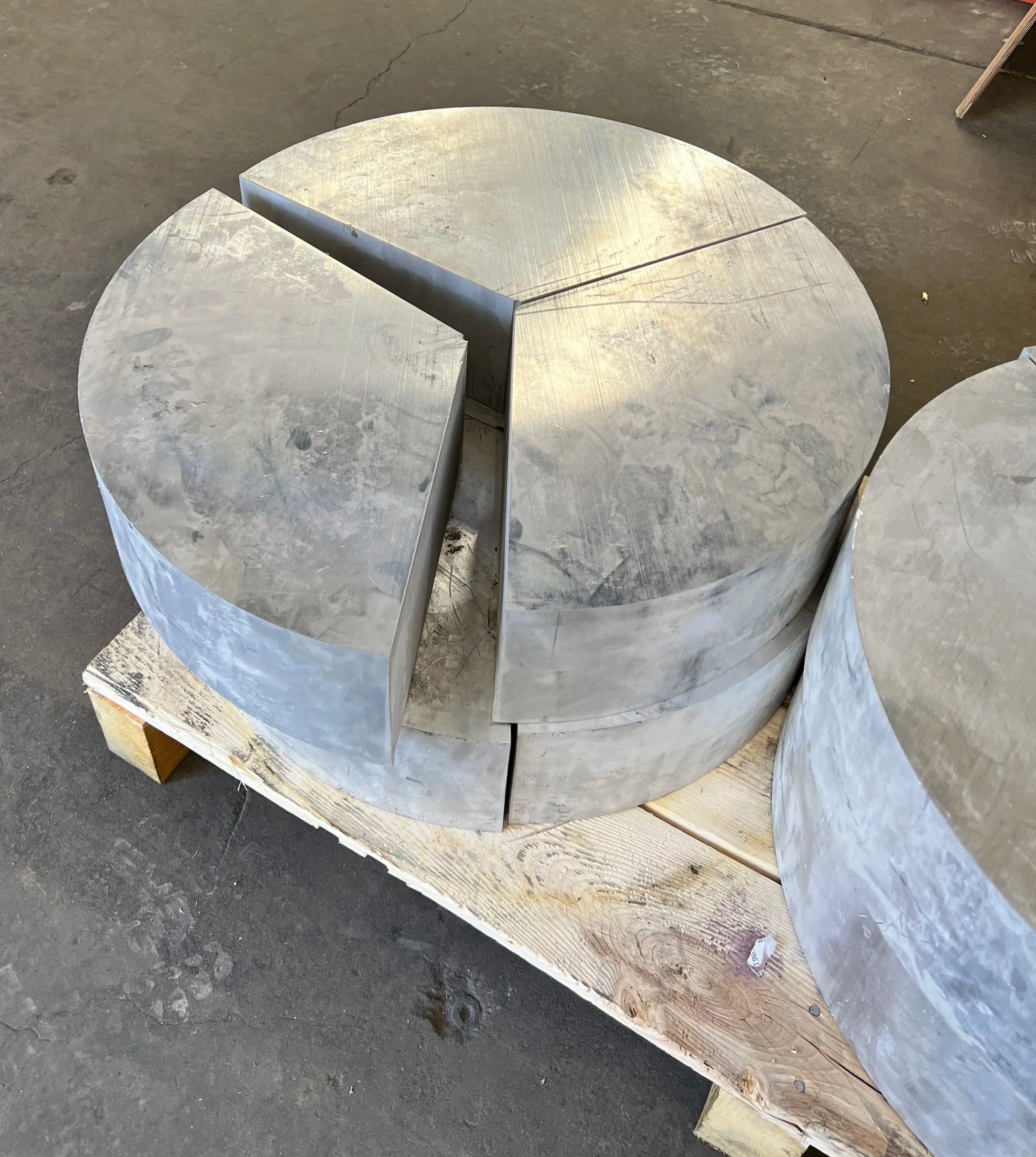
One of the advantages of waterjet cutting is its ability to produce complex profiles without the expensive dedicated tooling that some other manufacturing processes require. The process uses a high-pressure stream of water, often combined with abrasives, to cut the material. Because there’s no traditional cutting tool shaping the profile, we can move from one part design to another without investing in custom tooling.
This makes waterjet cutting particularly useful for:
Complex profiles
Large parts
Thick materials
Materials that are difficult to cut using traditional methods
And other applications
Large-Format Cutting Improves Efficiency
CAMM Metals has the ability to load material up to 60 inches by 120 inches and up to 6 inches thick onto our waterjet. That large working area creates opportunities to improve material utilization.
Rather than cutting one part from one piece of stock at a time, we can nest multiple components onto a single plate to maximize the available material. Better nesting can reduce material waste, which can ultimately help lower the cost per part.
We can also use common-edge cutting, positioning parts extremely close together so that a single cut can create the edges of two adjacent components. For example, parts can be nested approximately 0.030 inches apart, allowing one cut to serve both parts.
Loading one large plate and cutting numerous components in a single operation can also reduce the number of times material needs to be loaded and unloaded throughout the job. Instead of repeatedly bringing smaller pieces of stock to the machine, our team can load a large plate, run the nested program, and inspect the work as it progresses.
Waterjet Cutting Doesn’t Create a Heat-Affected Zone
Waterjet cutting is a cold-cutting process, meaning it doesn’t introduce the same heat into the material as thermal cutting processes. As a result, waterjet cutting does not create a heat-affected zone along the cut edge.
That can be particularly valuable for applications where material properties or edge condition are important. It also makes waterjet cutting a useful option for materials that may be sensitive to the effects of heat.
Cutting Strategy Should Match the Application
Not every waterjet-cut part requires the same level of precision. When a customer needs a highly accurate finished component, we can slow the cutting process to achieve the required results. But sometimes we use the waterjet to create a rough blank that will undergo additional CNC machining; in that situation, spending extra time producing an extremely precise waterjet profile may not provide meaningful value.
We can adjust the cutting strategy accordingly. For applications where the waterjet-cut piece will be machined afterward, increasing cutting speed can reduce process time and cost while still producing a blank that meets the requirements for the next operation. This approach helps avoid over-processing the part before it reaches the CNC machine.
CAMM Metals Handles Aerospace Alloys and Other Specialized Materials
CAMM Metals is located in an area with a strong aerospace manufacturing presence, so our team regularly works with the specialized alloys used throughout the industry. We have experience cutting a wide variety of aerospace materials, as well as red metals and other challenging materials.
Waterjet Cutting Presents a Flexible Cutting Process for a Wide Range of Applications
CAMM Metals has the right equipment to handle complex profiles, thick materials, specialized alloys, and different production requirements with flexibility and without relying on expensive dedicated tooling.
But the real advantage comes from our decades of experience with this process. Our collective knowledge accumulated over 27 years of waterjet cutting means we’ve encountered our share of challenges over the years. We know where waterjet cutting excels and where another manufacturing process may be a more suitable choice.
Have a challenging material or complex profile? Contact CAMM Metals to see if waterjet cutting is the right solution for your next project.